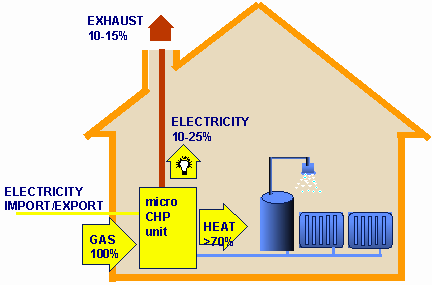
Micro CHP (Combined Heat & Power) is the
simultaneous production of heat and power within the home. It works
very much like the gas boiler in a central heating system and heats the
home in just the same way. However, at the same time it generates
electricity, some of which you will use in your own home; the remainder
is exported to the grid to be used by your neighbours.
Natural gas is consumed in an engine (or other prime
mover) to drive a generator which provides electricity for use within the home;
the cooling water from the engine is used to heat the home. In the
case of engine-based micro CHP a total of
around 70-80% of the energy value of the gas is
converted into heat, principally in the form of hot water which is used for
space heating and domestic hot water production as in a normal central heating system.
Between 10-25% is converted into electricity, and the remainder (5-15%) is lost
in the flue gases.
For fuel cell based systems, the gas produces
electricity through an electro-chemical process and electrical efficiency tends
to be significantly higher, in some cases more than 40%, but the total
efficiency is roughly the same.
This compares with a high efficiency (condensing) gas central heating boiler
where around 90% of the energy in the gas is converted into heat and the
remaining 10% is lost in the flue gases.
Although the total "efficiency"
of a micro CHP system is similar to a boiler system, the electricity produced
has a much higher value than heat. It is the value of this electricity which covers the investment cost
of the micro CHP unit and provides a net saving.